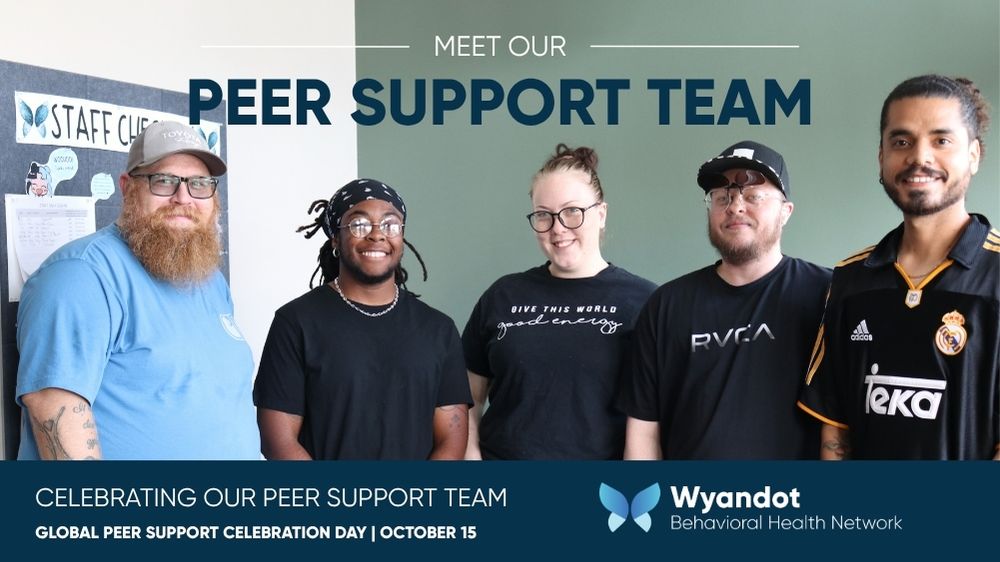
October 15 | Global Peer Support Celebration Day
Peer support services can be an important part of recovery. Recovery doesn’t look the same for everyone.
For one person, recovery may mean working toward a personal goal. For another, it may mean finding healthier ways to cope, building confidence, or learning how to enjoy life again.
No matter what recovery looks like, having someone alongside you can make a difference. That’s the heart of peer support.
At Wyandot Behavioral Health Network, our Peer Support Specialists walk alongside adults receiving services at WBHN. They offer encouragement, understanding, and support while helping each person find what works for them on their recovery journey.
What Does Peer Support Look Like?
Peer support doesn’t always look like another appointment or a list of things to get done. Sometimes, it means having time to talk through what you’re experiencing. Other times, it means stepping outside the usual routine and doing something that feels meaningful to you.
A Peer Support Specialist may spend time with someone in the community, help them connect with local resources, or take part in an activity they enjoy. The focus is on what the person wants and needs from that time.
Peer support makes room for recovery to include more than challenges. It can include connection, creativity, new experiences, and having fun.
The Difference Lived Experience Makes
One of the things that makes peer support different is lived experience.
Peer Support Specialists have their own experiences with mental health and/or substance use challenges. Sharing those experiences can help people feel understood and more comfortable talking about what they’re going through.
That shared understanding can also help when someone is facing a difficult situation or trying to navigate a system that feels confusing.
Peer support is a non-clinical service. It does not replace therapy, case management, or other behavioral health services. Instead, Peer Support Specialists work alongside the treatment team and bring a different perspective to a person’s care.
“Having lived experience in peer support is the equivalent of a formal education.”
— Markie Ridgway, Peer Support Team Supervisor
Finding Connection With Others
Peer support can also create connection with others who understand parts of what you’re experiencing.
WBHN offers a weekly peer support groups every Thursday from 10 a.m. to 4:30 p.m. at ArtMakers Place. The group gives people a chance to spend time with others who have experience with mental health and/or substance use challenges.
The same group schedule is offered each week to provide consistency for those who attend. Activities may include writing, poetry, creating art, or talking about mental health, substance use, and recovery.
“What happens in the group may change from week to week. Activities may include writing poetry, creating art, or talking about mental health, substance use, and recovery,” Ridgway said.
Recovery Is Yours to Define
Peer support starts with the belief that you know your own life best.
A Peer Support Specialist can offer another perspective, share what they’ve learned, and stand beside you when things get difficult. They can help you find resources, speak up for yourself, and take steps toward the things that matter to you.
But they don’t decide what recovery should look like.
That’s your choice.
Global Peer Support Celebration Day
October 15, we celebrate Global Peer Support Celebration Day and our Peer Support team, the people who walk alongside those we serve and support them throughout their recovery.
If you’re a current WBHN client and are interested in peer support, talk with your therapist or case manager about getting connected with our Peer Support team.
Learn More About Peer Support →
Request a Service
"*" indicates required fields